TWIL #023 - The Bar-Tailed Godwit Eats Its Own Organs Before Flying 13,000 km
Before its non-stop migration from Alaska to New Zealand, the bar-tailed godwit absorbs a quarter of its own internal organs for fuel - then regenerates them on arrival.
- #animals
- #birds
- #migration
- #biology
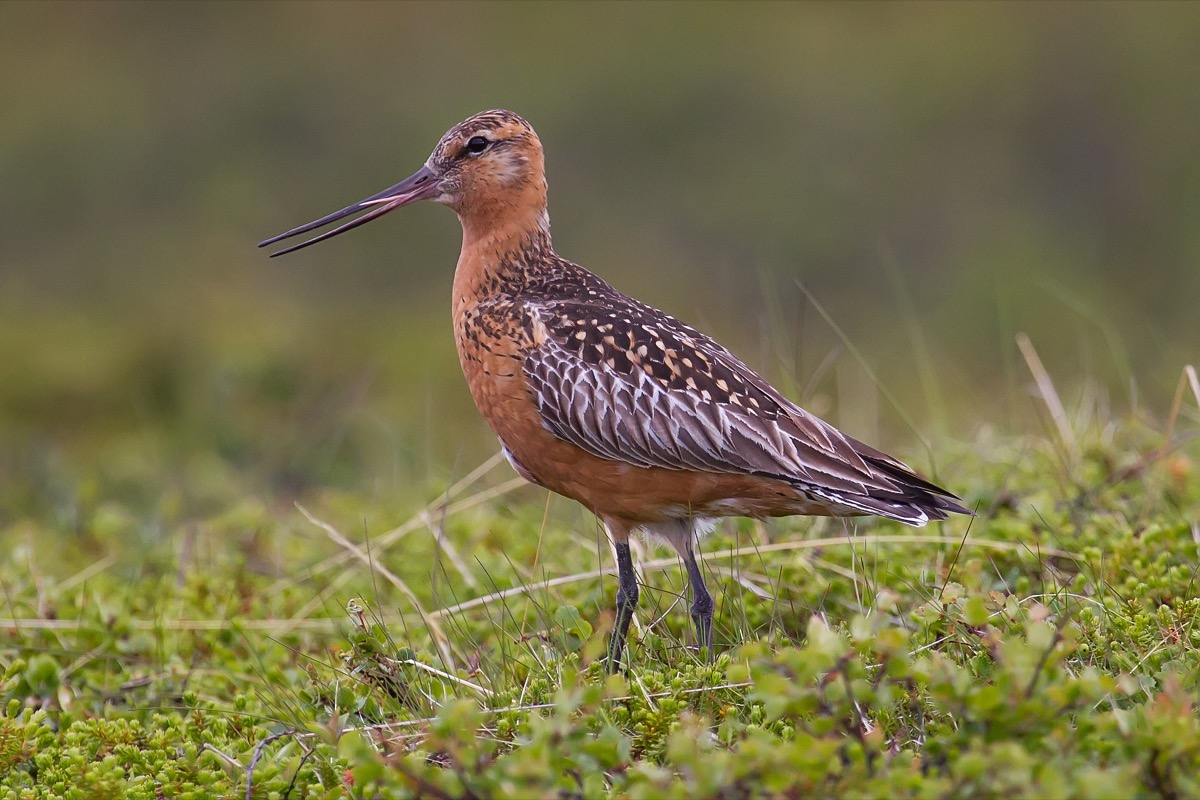
The bar-tailed godwit (Limosa lapponica baueri) completes what is considered the longest non-stop migration of any animal on Earth. Every year, it flies from Alaska to New Zealand - a journey of approximately 11,000 to 13,560 km - without landing, without eating, and without drinking. The flight takes between 8 and 11 days.
To achieve this, the bird undergoes a biological transformation before departure that sounds closer to science fiction than ornithology.
In the weeks before migration, the godwit:
- Accumulates fat until it accounts for 55% of its body weight - the highest fat-to-body ratio ever recorded in a bird
- Shrinks its liver, kidneys, gizzard, and intestines by up to 25%, absorbing the organ tissue to fuel additional muscle growth
- Enlarges its heart and flight muscles to handle the sustained load
During the flight, it runs entirely on stored fat and the metabolised organ tissue. On arrival in New Zealand, the organs that were partially consumed fully regenerate within weeks.
In 2022, a satellite-tagged godwit set a new record: 13,560 km in 11 days and one hour, flying from Alaska to Tasmania.
The regeneration mechanism is not fully understood. Mammals cannot do this - organ tissue consumed by metabolic stress in humans is simply gone. The godwit appears to have some mechanism for controlled, reversible organ reduction that science has not yet fully explained.