TWIL #028 - The Mimic Octopus Impersonates Its Enemy's Predator
When a territorial fish threatens it, the mimic octopus doesn't flee or fight - it shapeshifts into that fish's most feared predator on the spot.
- #animals
- #marine-biology
- #evolution
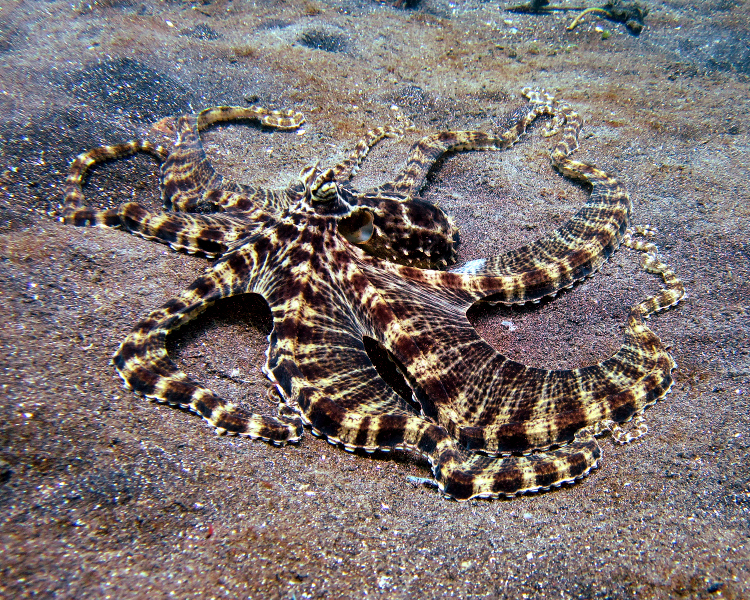
The mimic octopus (Thaumoctopus mimicus) was only discovered in 1998 in the waters off Sulawesi, Indonesia - and it immediately complicated what we thought we knew about animal mimicry.
Most mimics imitate one other species. The mimic octopus imitates multiple species, selecting the impersonation based on the specific threat it's facing. Documented impressions include the flatfish, the lionfish, and the banded sea snake - each conveying a different kind of danger to a different class of predator.
The most striking documented behaviour involves territorial damselfish. When a damselfish becomes aggressive toward the octopus, the octopus has been observed taking on the shape and colour pattern of the banded sea snake - which happens to be a known predator of damselfish. The octopus tucks six arms into a burrow, extends the other two in opposite directions with alternating black and white banding, and mimics the snake's undulating movement.
The damselfish retreats. The octopus moves on.
This is a specific, contextual, targeted response - the octopus apparently matching the impersonation to the identity of the attacker. Whether this represents genuine cognition or a simpler learned association is still debated, but the specificity of the response is difficult to explain without invoking some form of situational assessment.
The mimic octopus can also change texture (not just colour) - raising papillae on its skin to simulate rough surfaces, fins, or spines.