TWIL #044 - The Echidna Has a Four-Part Reproductive Organ and No Stomach
The echidna is one of only five egg-laying mammals on Earth - and its biology gets stranger the closer you look.
- #animals
- #biology
- #nature
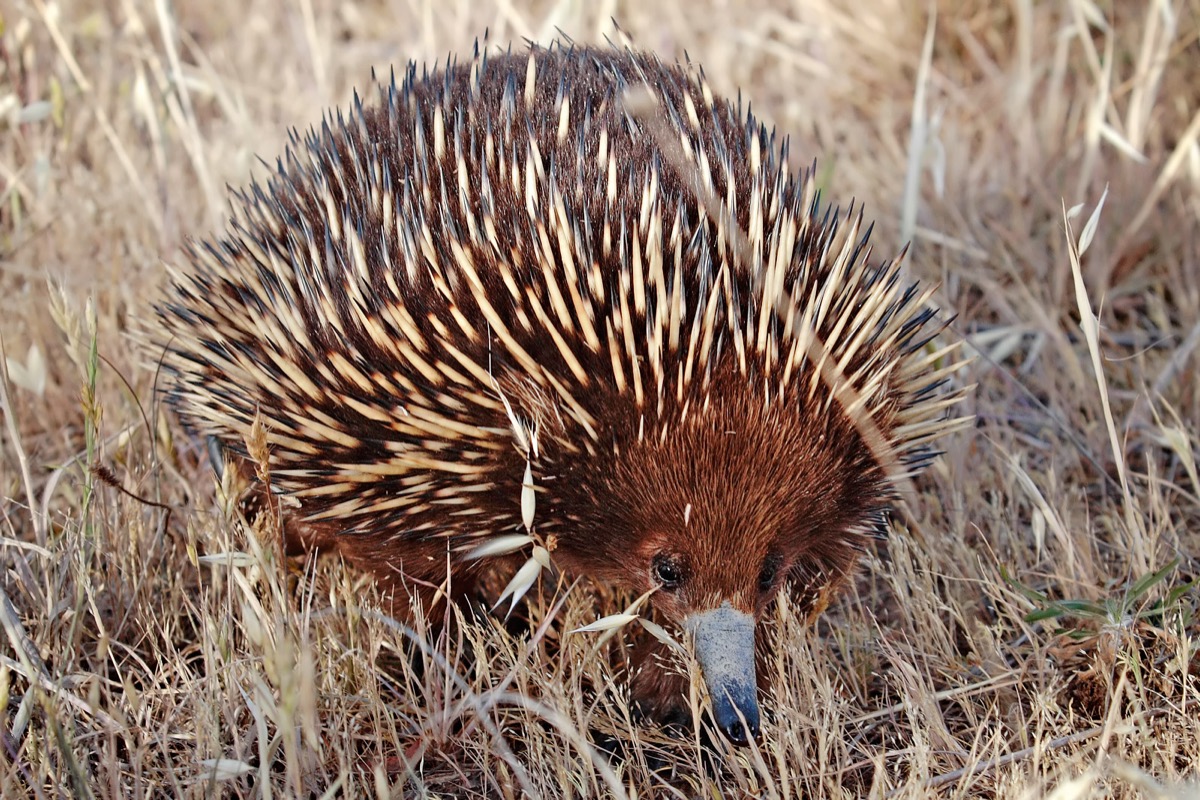
The short-beaked echidna (Tachyglossus aculeatus) is a monotreme - one of only five species of egg-laying mammals alive today, alongside the four species of platypus. That alone puts it in extraordinary company, but its biology gets stranger from there.
Reproduction: Male echidnas have a four-headed reproductive organ. During mating, two of the four heads are used at a time (alternating between sides with successive matings), matching the two-branched reproductive tract of the female. This is one of the more unusual reproductive arrangements in any mammal.
No stomach: Echidnas have no true stomach. Food passes directly from the oesophagus into the small intestine, where digestion happens. This is unusual among mammals; the stomach (with its acid-producing parietal cells) was lost or never fully evolved in the monotreme lineage.
The snout: Echidnas have around 2,000 electroreceptors in their snout. Like the platypus, they can detect the weak electrical fields generated by the muscle contractions of prey (ants, termites, worms), even through soil or leaf litter. Australian echidnas have far fewer electroreceptors than their New Guinea long-beaked relatives, but the ability is present.
Temperature: Their core body temperature - around 30–32°C - is one of the lowest of any mammal. This makes them highly energy-efficient but also sensitive to heat; they cannot tolerate temperatures above about 35°C and will die from heat stress if unable to find shade.
Lifespan: In captivity, echidnas can live over 50 years. A specimen at the Philadelphia Zoo reportedly survived 49 years. Wild lifespans are typically shorter (10–20 years) but still long for an insectivore of their size.
Spines: The spines are modified hairs - hollow, made of keratin, like a thickened and sharpened version of the quills on a porcupine.