TWIL #070 - Pigeons Can See Magnetic Fields and Navigate Using the Earth's Field Lines
Pigeons have navigated across hundreds of kilometres with pinpoint accuracy for thousands of years. Part of the answer involves a biological magnetic compass and five times more colour receptors than the human eye.
- #animals
- #biology
- #nature
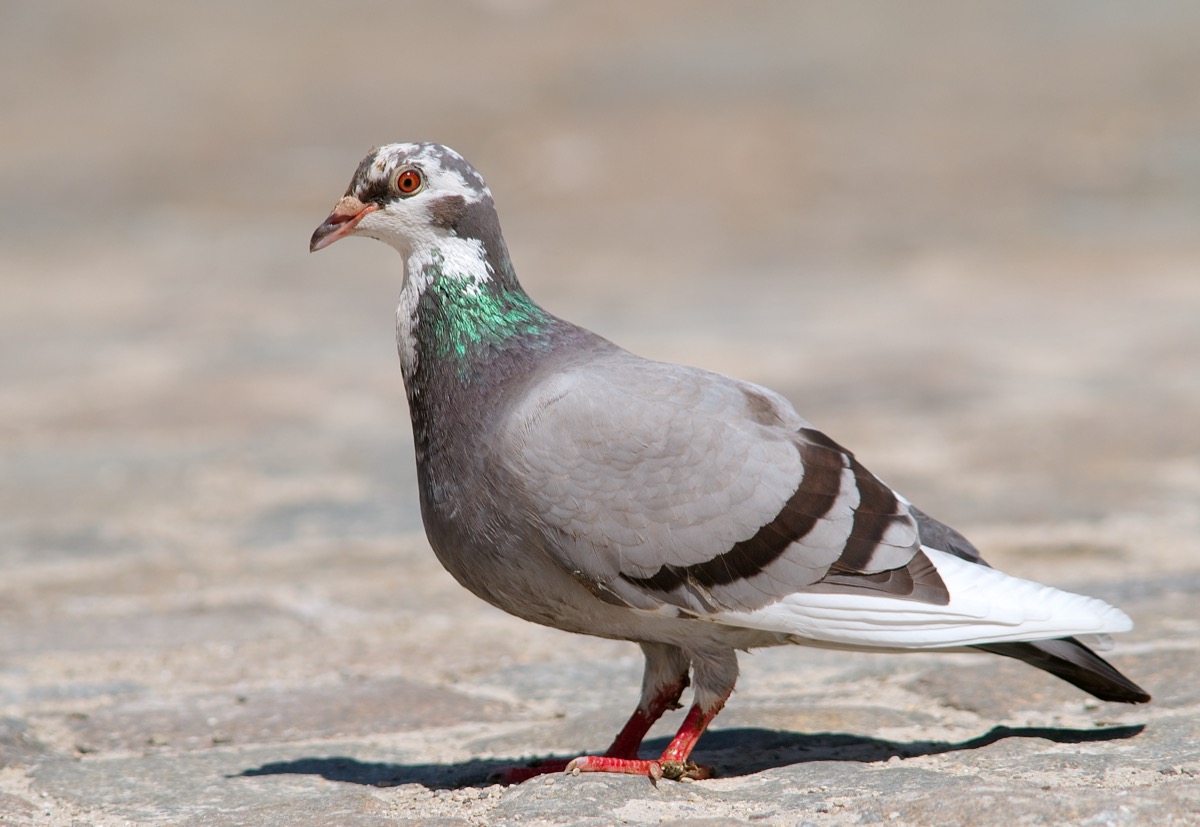
The homing pigeon (Columba livia domestica) can return to its home loft from release points hundreds of kilometres away, across unfamiliar terrain, in overcast conditions. Exactly how it does this has been studied intensively for decades and is still not fully resolved - but several mechanisms are established.
Magnetic sensing: Pigeons can detect the Earth's magnetic field. Research suggests two mechanisms may be involved:
- Magnetite crystals (iron oxide particles) found in the beak region may act as a compass, allowing the pigeon to sense field direction and intensity.
- Radical pair mechanisms in cryptochrome proteins in the eye may create a light-dependent magnetic sense - effectively allowing pigeons to "see" magnetic field lines overlaid on their visual field.
Evidence for the latter comes from the observation that magnetic orientation in pigeons is disrupted by certain wavelengths of light, which wouldn't make sense if the mechanism were purely mechanical.
Sun compass: Under clear skies, pigeons use the sun's position, compensating for time of day using an internal circadian clock. They also use polarised light patterns in the sky to navigate when the sun is obscured.
Olfactory navigation: Research by Floriano Papi suggested pigeons also build a "smell map" of their home area, using wind-borne odours to triangulate position. This remains debated but has experimental support.
Vision: Pigeons have five types of cone cells in their retinas (humans have three). They can see into the ultraviolet spectrum, making their visual world richer in detail and contrast than ours. They are also among the few non-human animals to pass the mirror self-recognition test - a standard marker of self-awareness in animals.
Historical use: Pigeons were used as military messengers from antiquity through World War II. The British pigeon Cher Ami delivered a critical message in 1918 despite being shot through the breast, losing a leg, and being partially blinded - saving nearly 200 US soldiers trapped behind enemy lines.